Question 1157747: A car travelling at 50 kilometer per hour crosses a bridge over a river 10 minutes before a boat travelling at 40 kilometers per hour passes under the bridge. The river and the bridge are straight and at right angles to each other. At what rate are the car and the boat separating 10 minutes after the boat passes under the bridge if the height of bridge is 10 meters?
Answer by KMST(5434)   (Show Source): (Show Source):
You can put this solution on YOUR website! The speeds in km/minute are  for the car and for the car and  for the boat. for the boat.
Defining the variable
  time since the boat passed under the bridge, in minutes, time since the boat passed under the bridge, in minutes,
 time since the car crossed the bridge, in minutes time since the car crossed the bridge, in minutes
Assuming that the road continues to be perpendicular to the river after the bridge,
for all  , we have , we have
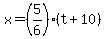 }distance between the car and the bridge, in km }distance between the car and the bridge, in km
 =distance between the boat and the point under the bridge, in km =distance between the boat and the point under the bridge, in km
 vertical distance between the boat and the bridge level vertical distance between the boat and the bridge level
For all ,
the coordinates for the car include  and and  , assuming the road is level and continues to be perpendicular to the bridge, while , assuming the road is level and continues to be perpendicular to the bridge, while
the boat coordinates include  , and , and  . .
The differences in x, y, and z coordinates between car and boat are
 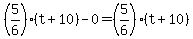 , ,
 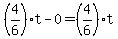 , and , and
  , ,
so the distance between the car and the boat, as a function of time is
 

 
For  , that distance is , that distance is
  

The rate of change of  as a function of is the derivative for every value of . as a function of is the derivative for every value of .
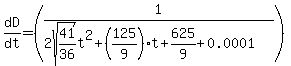
At , that is
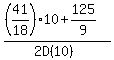 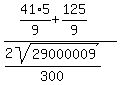 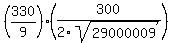  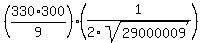
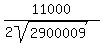 
 
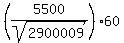
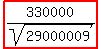
In Km/h, that is
| |
|
