Tutors Answer Your Questions about Miscellaneous Word Problems (FREE)
Question 180318: a) Find the area of a trapezoid with a height of 9 m and bases of 7 m and 25 m
b) Find the perimeter of a parallelogram with sides measuring 6.5 m and 3.5 m
Answer by ikleyn(53937)   (Show Source): (Show Source):
Question 181511: One side of a rectangular stage is 2 meters longer than the other. If the diagonal is 10 meters, then what are the lengths of the sides?
Answer by ikleyn(53937) (Show Source):
You can put this solution on YOUR website! .
One side of a rectangular stage is 2 meters longer than the other.
If the diagonal is 10 meters, then what are the lengths of the sides?
~~~~~~~~~~~~~~~~~~~~~~~~
The solution and the answer in the post by @HyperBrain both are incorrect due to arithmetic error.
See my correct solution below.
Let x = width
. . x+2 = length
+++
The diagonal of length 10 acts as the hypotenuse while x and x+2 are the legs. Using the Pythagorean theorem,
x2+(x+2)^2 = 10^2
x^2 + x^2 + 4x + 4 = 100
2x^2 + 4x - 96 = 0
x^2 + 2x - 48 = 0
(x+8)*(x-6) = 0
Use the positive root x = 6.
The sides are 6 meters and 8 meters. ANSWER
Solved correctly.
//////////////////////////////////
The fact that @HyperBrain repeats these words "Power up, @HyperBrain!" from post to post,
tells me that he uses a computer code.
The fact that @HyperBrain makes numerous errors from post to post,
tells me that his goal is to run the code, ONLY, without thinking is it correct or wrong.
The correctness of his solution is permanently out of his consideration.
The correctness is not interesting to him.
When a person writes this way, his character is seen through his writing as a clear day.
Question 1210639: Came across this log table:
log 1.1 = 0.04139 393 783 1169 1551 1931 2307 2680 3049 3416
I compared these numbers with another log table and the numbers differ. Would someone give an explanation for the difference ? Thanks.
Note: Each 3 and 4 digit numbers are separated, not one large number.
Answer by greenestamps(13367)  (Show Source): (Show Source):
You can put this solution on YOUR website!
According to two different sources....
log(1.1) = 0.04139 2685 1582 251...
Apparently the log table you quote is not displaying the actual value of the log to several decimal places; the digits after the initial "0.4139" have a different meaning. The meanings of those additional strings of digits are probably described in the reference where you got this; without seeing that explanation we can't tell you what they mean.
Question 1158792: Loudness measured in decibels (dB) is defined by loudness=10 logr I Over ^I lower 0
, where I is the intensity and I0=10 Superscript negative 12 W/msquared.
The noise level inside a convertible driving along the freeway with its top up is 80 dB. With the top down, the noise level is 97 dB. Find the intensity of the sound with the top up and the top down.
Answer by KMST(5397)  (Show Source): (Show Source):
Question 1210635: Two portions of metal chain has the following description:
Circular links, all same size, 1/2 inch in thickness.
Chain A: 3 feet in length.
Chain B: 22 inches in length.
One portion has 6 more links than the other.
Calculate number of links in each chain.
Not sure how to solve.
Answer by ikleyn(53937) (Show Source):
You can put this solution on YOUR website! .
D U P L I C A T E
This problem was just solved under this link
algebra.com/algebra/homework/word/misc/Miscellaneous_Word_Problems.faq.question.1210636.html
Question 1210638: A recipe is for an 8 inch square cake, but a round option is chosen. What size round cake pan should be used ?
Not sure how to solve.
Answer by josgarithmetic(39838) (Show Source):
You can put this solution on YOUR website! The assumption may be, the same upper or lower area is wanted. "Round", means "circle shape".
If d is diameter of the chosen circle, then  . .
Solve for d.
Question 1210636: 2 portions of metal chain has the following description:
Circular links, all same size, .5 inches in thickness.
Chain A: 3 feet in length.
Chain B: 22 inches in length.
One portion contained 6 links more than the other.
Calculate number of links in each chain.
Not sure how to solve.
Answer by greenestamps(13367) (Show Source):
You can put this solution on YOUR website!
Let x be the "inside" length in inches of each link.
Since the thickness of the links is .5 inches, the length of a "chain" of 1 link is (x+1) inches.
Adding each new link increases the total length of the chain by x inches, so the length of a chain of 2 links is (2x+1) inches, the length of a chain of 3 links is (3x+1) inches,... and the length of a chain of n links is (nx+1) inches.
The longer chain in the problem contains 6 more links than the shorter chain, so the difference in the lengths of the two chains is 6x.
Since the longer chain is 14 inches longer than the shorter chain...
6x = 14
x = 14/6 = 7/3
The length of the shorter chain is 22 inches. To find the number of links in that chain...
nx+1 = 22
n(7/3)+1 = 22
(7/3)n = 21
n = 21/(7/3) = 9
ANSWERS: The number of links in the shorter chain is 9; the number in the longer chain is 9+6 = 15
Question 1158083: Finite Mathematics:
A contestant draws a sequence of three cards, one question per card, and tries to answer the three questions. There are three cards with history questions, six cards with literature questions, and eight cards with science questions. Find the probability of each of the following. (Round your answers to four decimal places.)
(a) the questions are history, literature, and science, in that order
(b) all three are literature questions
(c) the first is science, the second is history, and the third is science
Answer by KMST(5397) (Show Source):
You can put this solution on YOUR website! At first, there is a total of  cards to draw from. cards to draw from.
After the first card is drawn, there will be  cards to draw from. cards to draw from.
After the first card and second have been drawn, there will be  cards to draw from. cards to draw from.
(a) Probability that the questions are history, literature, and science, in that order:
At first,
 cards to draw from, including cards to draw from, including  history cards. history cards.
The probability that the first card drawn is a history card is
 . .
After that,
 cards to draw the second card from, including all cards to draw the second card from, including all  literature cards. literature cards.
The probability to draw a literature card after having drawn a history card is
 . .
After that,
 cards to draw the third card from, including all cards to draw the third card from, including all  science cards. science cards.
The probability to draw a science car after having drawn a history card followed by a literature car is

The probability that the questions are history, literature, and science, in that order is
 (rounded to four decimal places). (rounded to four decimal places).
(b) Probability that all three cards drawn are literature questions:
At first,
cards to draw from, including literature cards.
The probability that the first card drawn is a literature card is
 . .
After that,
cards to draw the second card from, including  literature cards. literature cards.
The probability to draw a second literature card after having drawn a literature card is
 . .
After that,
cards to draw the third card from,  literature cards. literature cards.
The probability to draw a third literature card after two literature cards is

The probability that all three questions drawn are literature questions is
 (rounded to four decimal places). (rounded to four decimal places).
(c) Probability that the first card drawn is science, the second is history, and the third is science
At first,
cards to draw from, including science cards.
The probability that the first card drawn is a science card is
 . .
After that,
cards to draw the second card from, including history cards and  science cards. science cards.
The probability to draw a history card after having drawn a science card is
 . .
After that,
cards to draw the third card from, including science cards.
The probability to draw a science card after having drawn a science card and a history card is

The probability that the first card drawn is science, the second is history, and the third is science is
 (rounded to four decimal places). (rounded to four decimal places).
Question 172086: I have been working on this math problem and I cant' figure it out and I was wondering if someone could help me? Please and Thank You!! I deeply appreciate it!!
Complex fractions
Simplify.
1+1/x-1 over 1+1/x^2-1
Answer by MathTherapy(10858)  (Show Source): (Show Source):
Question 1210626: Another logarithm question:
Calculate log 5601 using table.
Not in table.
Closest: 5599 = 363 5611 = 364 Difference of .001
Difference of 5601 - 5999 = 2
Difference of 5611 - 5601 = 10
Not sure how to proceed.
Found 4 solutions by ikleyn, timofer, greenestamps, josgarithmetic:
Answer by ikleyn(53937) (Show Source):
You can put this solution on YOUR website! .
For a reader:
The difference / (the discrepancy) between the numbers 3.748996 and 3.748265
in the post by @josgarithmetic tells/indicates that the procedure used by @josgarithmetic in his post is ERRONEOUS.
In order to convince that a computational procedure is valid,
the discrepancy MUST be much lesser.
I do not try to explain it to @josgarithmetic or to convince him (since it is useless).
I only want to aware a reader: do not accept wrong recommendations.
Answer by timofer(159) (Show Source): (Show Source):
Answer by greenestamps(13367) (Show Source):
You can put this solution on YOUR website!
The calculations in the response from @jogsarithmetic make no sense.
The answer they come out with is 3.748996, and they show the correct answer (from a calculator) to be 3.748265. The answer they come out with should not be that far from the correct answer.
From a table, find
log(5.60) = 0.748188
log(5.61) = 0.748963
(Note that the answer from the other tutor for log(5601) is greater than log(5610), which makes no sense...)
You want to find log(5601) = log(5.601*10^3) = 3+log(5.601)
5.601 is one-tenth of the way from 5.60 to 5.61, so log(5.601) is (very nearly) one-tenth of the way from log(5.60) to log(5.61).
The difference between log(5.60) and log(5.61) is 0.748963-0.748188 = 0.000775
One-tenth of that difference is 0.0000775. So
log(5.601) = 0.748188+0.0000775 = 0.7482655
ANSWER: log(5601) = 3.7482655
Answer by josgarithmetic(39838) (Show Source):
Question 918440: A Norman window has the shape of a rectangle surmounted by a semicircle. If the perimeter of the window is 36.900 ft. give the area A of the window in square feet when the width is 7.500 ft. Give the answer to two decimal places.
I'm stuck and I need this one to finish my homework! Even my dad can't help me and I got no results from google and my math book only uses rectangular examples!!! PLEASE HELP ME!!!!
Answer by MathTherapy(10858) (Show Source):
You can put this solution on YOUR website!
A Norman window has the shape of a rectangle surmounted by a semicircle. If the perimeter of the window is 36.900 ft. give
the area A of the window in square feet when the width is 7.500 ft. Give the answer to two decimal places.
I'm stuck and I need this one to finish my homework! Even my dad can't help me and I got no results from google and my math
book only uses rectangular examples!!! PLEASE HELP ME!!!!
*********************************************************
Respondent @josgaritmetic presumes that additional info is needed to determine the area in this problem. Quite the contrary!
 .
This problem was redone and corrected, since the width and perimeter were erroneously entered before as 7,500 and 36,900,
respectively, instead of 7.5' and 36.9', respectively
Width (W), or DC = 7.5’
Diameter of semi-circle = AB = DC = W = 7.5'
Perimeter (GIVEN) = 36.9’
Perimeter of window = BCDA + length of arc of semi-circle AB
= L + W + L + circumference of semicircle (length of arc AB)
= W + 2L + circumference of semicircle (length of arc AB)
36.9 = 7.5 + 2L + .
This problem was redone and corrected, since the width and perimeter were erroneously entered before as 7,500 and 36,900,
respectively, instead of 7.5' and 36.9', respectively
Width (W), or DC = 7.5’
Diameter of semi-circle = AB = DC = W = 7.5'
Perimeter (GIVEN) = 36.9’
Perimeter of window = BCDA + length of arc of semi-circle AB
= L + W + L + circumference of semicircle (length of arc AB)
= W + 2L + circumference of semicircle (length of arc AB)
36.9 = 7.5 + 2L +  ꙥD ---- Substituting 36.9 for perimeter, 7.5 for W, and ꙥD for circumference of
semi-circle, AB
36.9 = 7.5 + 2L + ꙥAB
36.9 = 7.5 + 2L + 7.5ꙥ
36.9 = 7.5 + 2L + 3.75ꙥ
36.9 - 7.5 - 3.75ꙥ = 2L
29.4 - 3.75ꙥ = 2L ꙥD ---- Substituting 36.9 for perimeter, 7.5 for W, and ꙥD for circumference of
semi-circle, AB
36.9 = 7.5 + 2L + ꙥAB
36.9 = 7.5 + 2L + 7.5ꙥ
36.9 = 7.5 + 2L + 3.75ꙥ
36.9 - 7.5 - 3.75ꙥ = 2L
29.4 - 3.75ꙥ = 2L
 8.81' = L
Area of rectangle, ABCD: LW = 8.81(7.5) = 66.075 sq ft
Diameter of semi-circle, AB = AB
Radius (r) =
8.81' = L
Area of rectangle, ABCD: LW = 8.81(7.5) = 66.075 sq ft
Diameter of semi-circle, AB = AB
Radius (r) =  D = AB = 7.5 = 3.75’
Area of semi-circle AB = D = AB = 7.5 = 3.75’
Area of semi-circle AB =  =
=  ꙥ ---- Substituting 3.75 for r
= (14.0625ꙥ)
= (44.17864) = 22.08932 sq ft
Area of the window = Area of rectangle, ABCD + Area of semi-circle AB
= 66.075 sq ft + 22.08932 sq ft = 88.16432, or approximately 88.16 sq ft ꙥ ---- Substituting 3.75 for r
= (14.0625ꙥ)
= (44.17864) = 22.08932 sq ft
Area of the window = Area of rectangle, ABCD + Area of semi-circle AB
= 66.075 sq ft + 22.08932 sq ft = 88.16432, or approximately 88.16 sq ft
Question 1007049: Mary has $3,500 in a savings account earning 4 1/2% annual interest that is compounded continuously. How much will be in the account at the end of 3 years?
Answer by ikleyn(53937) (Show Source):
You can put this solution on YOUR website! .
Mary has $3,500 in a savings account earning 4 1/2% annual interest that is compounded continuously.
How much will be in the account at the end of 3 years?
~~~~~~~~~~~~~~~~~~~~~~~~~~
Calculations in the post by @lwsshak3 are incorrect and lead to wrong answer.
I came to bring a correct solution.
Formula for continuous compounding: A =  , ,
where P is initial investment, r is the interest rate, A is the amount after t years.
A =  = $4005.88, to the last cent. ANSWER = $4005.88, to the last cent. ANSWER
Solved correctly.
Question 1163381: A. According to the Turkish tax legislation, there are two main types of tax statuses regulated on the basis of residence: resident taxpayers and non-resident taxpayers. Individual income tax rates applicable on resident taxpayers for 2018 - 2019 are as follows:
Income Scales (TRY) Rate (%)
Up to 14,800 15
14,801 - 34,000 20
34,001 - 120,000 27
120,001 and over 35
a) Create a Mathematical Model that represents the aforementioned information to calculate the annual income tax.
b) How much annual income tax you will have to pay if your monthly taxable income is TRY 9,000.
Answer by CPhill(2264)  (Show Source): (Show Source):
You can put this solution on YOUR website! Based on the 2018 - 2019 Turkish tax brackets provided, here is the mathematical model and the calculation for the specified income.
### a) Mathematical Model
Let $I$ represent the **Annual Taxable Income** (in TRY) and $T(I)$ represent the **Annual Income Tax**. The progressive tax system is modeled as a piecewise function:
$$
T(I) =
\begin{cases}
0.15I & \text{if } 0 < I \le 14,800 \\
2,220 + 0.20(I - 14,800) & \text{if } 14,800 < I \le 34,000 \\
6,060 + 0.27(I - 34,000) & \text{if } 34,000 < I \le 120,000 \\
29,280 + 0.35(I - 120,000) & \text{if } I > 120,001
\end{cases}
$$
**Breakdown of Cumulative Constants:**
* **$2,220$**: Tax on the first bracket ($14,800 \times 0.15$).
* **$6,060$**: Total tax through the second bracket ($2,220 + [34,000 - 14,800] \times 0.20$).
* **$29,280$**: Total tax through the third bracket ($6,060 + [120,000 - 34,000] \times 0.27$).
---
### b) Annual Income Tax Calculation
**1. Determine Annual Taxable Income**
Since the tax rates apply to annual income, we first convert the monthly taxable income:
$$I = 9,000 \text{ TRY/month} \times 12 \text{ months} = 108,000 \text{ TRY}$$
**2. Identify the Relevant Bracket**
The annual income of $108,000$ TRY falls into the **third bracket** ($34,001$ to $120,000$).
**3. Apply the Formula**
Using the third part of our piecewise model:
$$T(108,000) = 6,060 + 0.27 \times (108,000 - 34,000)$$
$$T(108,000) = 6,060 + 0.27 \times (74,000)$$
$$T(108,000) = 6,060 + 19,980$$
$$T(108,000) = 26,040$$
**Final Answer:**
If your monthly taxable income is TRY 9,000, you will have to pay an annual income tax of **TRY 26,040**.
Question 1163408: According to the Turkish tax legislation, there are two main types of tax statuses regulated on the basis of residence: resident taxpayers and non-resident taxpayers. Individual income tax rates applicable on resident taxpayers for 2018 - 2019 are as follows:
Income Scales (TRY) Rate (%)
Up to 14,800 15
14,801 - 34,000 20
34,001 - 120,000 27
120,001 and over 35
a) Create a Mathematical Model that represents the aforementioned information to calculate the annual income tax.
b) How much annual income tax you will have to pay if your monthly taxable income is TRY 9,000.
Answer by CPhill(2264) (Show Source):
You can put this solution on YOUR website! ```python?code_reference&code_event_index=2
def calculate_tax(annual_income):
if annual_income <= 14800:
return annual_income * 0.15
elif annual_income <= 34000:
return 14800 * 0.15 + (annual_income - 14800) * 0.20
elif annual_income <= 120000:
return 14800 * 0.15 + (34000 - 14800) * 0.20 + (annual_income - 34000) * 0.27
else:
return 14800 * 0.15 + (34000 - 14800) * 0.20 + (120000 - 34000) * 0.27 + (annual_income - 120000) * 0.35
monthly_income = 9000
annual_income = monthly_income * 12
tax = calculate_tax(annual_income)
print(f"{annual_income=}")
print(f"{tax=}")
# Checking bracket constants
print(f"Bracket 1 tax: {14800 * 0.15}")
print(f"Bracket 2 tax: {(34000 - 14800) * 0.20}")
print(f"Bracket 3 tax: {(120000 - 34000) * 0.27}")
```
```text?code_stdout&code_event_index=2
annual_income=108000
tax=26040.0
Bracket 1 tax: 2220.0
Bracket 2 tax: 3840.0
Bracket 3 tax: 23220.0
```
To calculate the annual income tax based on the 2018-2019 Turkish tax brackets, we can define a piecewise mathematical model and then apply it to your specific income.
### a) Mathematical Model
Let $I$ represent the **Annual Taxable Income** (in TRY) and $T(I)$ represent the **Annual Income Tax**. The progressive tax system is modeled as follows:
$$
T(I) =
\begin{cases}
0.15I & \text{if } 0 < I \le 14,800 \\
2,220 + 0.20(I - 14,800) & \text{if } 14,800 < I \le 34,000 \\
6,060 + 0.27(I - 34,000) & \text{if } 34,000 < I \le 120,000 \\
29,280 + 0.35(I - 120,000) & \text{if } I > 120,000
\end{cases}
$$
**Derivation of constants:**
* **$2,220$:** Tax on the full first bracket ($14,800 \times 0.15$).
* **$6,060$:** Tax on the first bracket plus the full second bracket ($2,220 + [34,000 - 14,800] \times 0.20$).
* **$29,280$:** Tax on the first three brackets ($6,060 + [120,000 - 34,000] \times 0.27$).
---
### b) Calculation for TRY 9,000 Monthly Income
**Step 1: Determine Annual Taxable Income**
Since the brackets are annual, we first convert the monthly income:
$$I = 9,000 \text{ TRY/month} \times 12 \text{ months} = \mathbf{108,000 \text{ TRY}}$$
**Step 2: Identify the Correct Bracket**
The annual income of $108,000$ TRY falls into the **third bracket** ($34,001 - 120,000$).
**Step 3: Apply the Formula**
Using the third piece of our mathematical model:
$$T(108,000) = 6,060 + 0.27 \times (108,000 - 34,000)$$
$$T(108,000) = 6,060 + 0.27 \times (74,000)$$
$$T(108,000) = 6,060 + 19,980$$
$$T(108,000) = 26,040 \text{ TRY}$$
**Final Answer:**
If your monthly taxable income is TRY 9,000, you will have to pay an annual income tax of **TRY 26,040**.
Question 1164610: Given the following logical expression, place the operations in the order in which you would apply, from first operation to last.
p → q ∨ ~r
Found 2 solutions by Edwin McCravy, CPhill:
Answer by Edwin McCravy(20086)  (Show Source): (Show Source):
You can put this solution on YOUR website!
Remember the sentence "Never Argue Over Ideas" for N, A, O, I.

NOT, AND, OR, IF-THEN

p → q ∨ ~r

The proposition is

p IF THEN q OR NOT r

NOT comes first, so put parentheses around ~r

p → q ∨ (~r)

AND comes second.  There are no ANDs, so copy it over.

p → q ∨ (~r)

OR comes third. There is one OR, so put brackets around q ∨ (~r)

p → [q ∨ (~r)]

[You could think of the girl's name "NAOMI" but you would have to remember to
ignore the M.]

Edwin
Answer by CPhill(2264) (Show Source):
You can put this solution on YOUR website! To determine the correct order of operations for the logical expression $p \to q \lor \neg r$, we follow the standard **Order of Logical Precedence**. Much like "PEMDAS" in algebra, logic has a hierarchy that dictates which operator is evaluated first.
The standard order is:
1. **Negation** ($\neg$ or $\sim$)
2. **Conjunction** ($\land$)
3. **Disjunction** ($\lor$)
4. **Conditional** ($\to$)
5. **Biconditional** ($\leftrightarrow$)
---
### **Order of Application**
Based on the rules above, here is the step-by-step order for your expression:
1. **First: Negation ($\sim r$)**
The "NOT" operator has the highest priority. You must determine the truth value of $\sim r$ before it can be used in any other operation.
2. **Second: Disjunction ($q \lor \sim r$)**
The "OR" operator is next in the hierarchy. You take the result from the first step and evaluate it against $q$.
3. **Last: Conditional ($p \to \dots$)**
The "IF...THEN" operator has the lowest priority in this expression. It acts as the "main connective," linking $p$ to the result of the entire right-hand side.
### **Summary Table**
| Order | Operation | Symbol |
| :--- | :--- | :--- |
| 1st | Negation | $\sim$ |
| 2nd | Disjunction | $\lor$ |
| 3rd | Conditional | $\to$ |
**Visual Grouping:** If you were to add parentheses to show this order, the expression would look like this: $(p \to (q \lor (\sim r)))$.
Are you building a truth table for this expression, or just practicing the syntax?
Question 1164606: Write a piecewise function for the given situation.
A parking garage charges $2 an hour for parking in the garage with a maximum amount of money you can be charged is $16 no matter the amount time you parked there.
Answer by CPhill(2264) (Show Source):
You can put this solution on YOUR website! To write this piecewise function, we define the cost $C$ based on the number of hours $t$ spent in the garage.
### **1. Identify the Conditions**
* **The Hourly Rate:** The garage charges **$2$** per hour. This is represented by $2t$.
* **The Maximum Cap:** Once the cost reaches **$16$**, the price stops increasing.
* **The "Switch" Point:** To find when the cap kicks in, we solve $2t = 16$. This happens at **$t = 8$** hours.
---
### **2. The Piecewise Function**
Let $C(t)$ be the total cost in dollars and $t$ be the time in hours ($t \ge 0$):
$$C(t) =
\begin{cases}
2t & 0 \le t < 8 \\
16 & t \ge 8
\end{cases}$$
---
### **3. Breakdown of the Function**
* **$2t$ for $0 \le t < 8$:** If you stay for less than 8 hours, you pay exactly \$2 for every hour parked. For example, 3 hours costs \$6.
* **$16$ for $t \ge 8$:** Once you hit the 8-hour mark, the "flat rate" applies. Whether you stay for 9 hours, 12 hours, or 24 hours, the price remains stuck at \$16.
### **Quick Check**
If you stay for **5 hours**: $C(5) = 2(5) = \$10$.
If you stay for **10 hours**: $C(10) = \$16$ (since $10 > 8$).
Does your specific parking problem require you to account for partial hours (like rounding up to the next hour), or is it strictly linear?
Question 1164608: Translate the following statement to a symbolic representation.
Doc Brown was not killed by the terrorists
Answer by CPhill(2264) (Show Source):
Question 1164609: Given the following logical expression, place the operations in the order in which you would apply, from first operation to last.
~p ∧ q → r
Answer by CPhill(2264) (Show Source):
You can put this solution on YOUR website! Following the standard rules of **Logical Precedence**, we evaluate the operations from the most "tightly bound" operator to the "main connective."
The hierarchy is as follows:
1. **Negation** ($\sim$)
2. **Conjunction** ($\land$)
3. **Disjunction** ($\lor$)
4. **Conditional** ($\to$)
---
### **Order of Application**
For the expression **$\sim p \land q \to r$**, the operations should be applied in this order:
1. **First: Negation ($\sim p$)**
The "NOT" operator is applied only to the variable immediately following it. You must flip the truth value of $p$ first.
2. **Second: Conjunction ($\sim p \land q$)**
The "AND" operator takes precedence over the conditional. You evaluate the relationship between the result of Step 1 and $q$.
3. **Last: Conditional ($\dots \to r$)**
The "IF...THEN" operator is the main connective here. It evaluates the relationship between the entire left-hand side (the antecedent) and $r$ (the consequent).
### **Summary Table**
| Order | Operation | Symbol | Resulting Grouping |
| :--- | :--- | :--- | :--- |
| **1st** | Negation | $\sim$ | $(\sim p)$ |
| **2nd** | Conjunction | $\land$ | $(\sim p \land q)$ |
| **3rd** | Conditional | $\to$ | $((\sim p \land q) \to r)$ |
---
**Wait, why not the arrow first?**
In logic, the conditional ($\to$) is considered "weaker" than conjunction or negation. If you wanted the arrow to be evaluated first, the expression would have required parentheses like this: $\sim p \land (q \to r)$. Without them, we follow the hierarchy above.
Are you working on a truth table for this specific statement?
Question 1164611: Translate the following statement to a symbolic representation.
Madeline Kahn played Mrs. White or Coleen Camp played Yvette in the movie Clue
Answer by CPhill(2264) (Show Source):
You can put this solution on YOUR website! To translate the statement into a symbolic representation, we first define the individual atomic propositions (simple statements) and then use the appropriate logical connective.
### **1. Define the Propositions**
* Let **$P$** represent: "Madeline Kahn played Mrs. White."
* Let **$Q$** represent: "Coleen Camp played Yvette."
### **2. Identify the Logical Connective**
The statement uses the word **"or"**, which corresponds to the **disjunction** operator in logic.
### **3. Symbolic Representation**
$$P \lor Q$$
---
### **Logical Breakdown**
* **$P$**: Madeline Kahn played Mrs. White.
* **$\lor$**: or
* **$Q$**: Coleen Camp played Yvette.
> **Note:** In formal logic, this is an **inclusive or**, meaning the statement is true if Madeline Kahn played Mrs. White, if Coleen Camp played Yvette, or if both are true (which, in the case of the movie *Clue*, is historically accurate).
Question 1164633: The U.S. currently has seven federal income tax brackets, with rates of 10%, 12%, 22%, 24%, 32%, 35% and 37%. If you fall into the 37% bracket, that doesn’t mean that the entirety of your taxable income will be subject to a 37% tax. Instead, 37% is your top marginal tax rate.
FEDERAL TAX BRACKETS 2018 - 2019 Tax rate (%)
$0 - $9,525 10
$9,526 - $38,700 12
$38,701 - $82,500 22
$82,501 - $157,500 24
$157,501 - $200,000 32
$200,001 - $500,000 35
$500,001+ 37
Table : 1 Federal income tax brackets
Required:
i) Create a Mathematical Model that represents the aforementioned information to calculate the annual income tax.
ii) How much annual income tax you will have to pay if your monthly taxable income is $ 40,000?
Answer by CPhill(2264) (Show Source):
You can put this solution on YOUR website! ```python?code_reference&code_event_index=2
brackets = [
(0, 9525, 0.10),
(9525, 38700, 0.12),
(38700, 82500, 0.22),
(82500, 157500, 0.24),
(157500, 200000, 0.32),
(200000, 500000, 0.35),
(500000, float('inf'), 0.37)
]
cumulative_taxes = []
prev_limit = 0
total_tax = 0
for low, high, rate in brackets[:-1]:
tax_in_bracket = (high - low) * rate
total_tax += tax_in_bracket
cumulative_taxes.append(total_tax)
print(f"Cumulative taxes at thresholds: {cumulative_taxes}")
def calculate_tax(income):
tax = 0
for low, high, rate in brackets:
if income > low:
taxable_amount = min(income, high) - low
tax += taxable_amount * rate
else:
break
return tax
monthly_income = 40000
annual_income = monthly_income * 12
tax_due = calculate_tax(annual_income)
print(f"Annual Income: {annual_income}")
print(f"Tax Due: {tax_due}")
```
```text?code_stdout&code_event_index=2
Cumulative taxes at thresholds: [952.5, 4453.5, 14089.5, 32089.5, 45689.5, 150689.5]
Annual Income: 480000
Tax Due: 143689.5
```
To calculate the federal income tax based on the provided progressive tax brackets, we first define the mathematical structure of the system and then apply it to the specific income provided.
### **i) Mathematical Model for Annual Income Tax**
Let $x$ represent the **annual taxable income**. The total annual income tax $T(x)$ is a piecewise function. To build this model, we calculate the cumulative tax paid at the top of each bracket:
* **Bracket 1 (10%):** $9,525 \times 0.10 = \$952.50$
* **Bracket 2 (12%):** $952.50 + (38,700 - 9,525) \times 0.12 = \$4,453.50$
* **Bracket 3 (22%):** $4,453.50 + (82,500 - 38,700) \times 0.22 = \$14,089.50$
* **Bracket 4 (24%):** $14,089.50 + (157,500 - 82,500) \times 0.24 = \$32,089.50$
* **Bracket 5 (32%):** $32,089.50 + (200,000 - 157,500) \times 0.32 = \$45,689.50$
* **Bracket 6 (35%):** $45,689.50 + (500,000 - 200,000) \times 0.35 = \$150,689.50$
**The Piecewise Mathematical Model $T(x)$:**
$$T(x) =
\begin{cases}
0.10x & 0 \le x \le 9,525 \\
952.50 + 0.12(x - 9,525) & 9,525 < x \le 38,700 \\
4,453.50 + 0.22(x - 38,700) & 38,700 < x \le 82,500 \\
14,089.50 + 0.24(x - 82,500) & 82,500 < x \le 157,500 \\
32,089.50 + 0.32(x - 157,500) & 157,500 < x \le 200,000 \\
45,689.50 + 0.35(x - 200,000) & 200,000 < x \le 500,000 \\
150,689.50 + 0.37(x - 500,000) & x > 500,000
\end{cases}$$
---
### **ii) Calculation for Monthly Taxable Income of $40,000**
**Step 1: Determine Annual Taxable Income**
$$\text{Annual Income } (x) = \$40,000 \times 12 = \$480,000$$
**Step 2: Identify the Tax Bracket**
The income of $\$480,000$ falls into the **35% bracket** ($200,001$ to $500,000$).
**Step 3: Apply the Model**
Using the corresponding piece of the function:
$$T(480,000) = 45,689.50 + 0.35(480,000 - 200,000)$$
$$T(480,000) = 45,689.50 + 0.35(280,000)$$
$$T(480,000) = 45,689.50 + 98,000$$
$$T(480,000) = \$143,689.50$$
**Final Result:**
If your monthly taxable income is $\$40,000$, your total annual federal income tax would be **$\$143,689.50$**.
Question 46425: One day, the temperature at 2:00 A.M. was 43�F, and by 3:00 P.M. the temperature was 56�F. What was the hourly rate of temperature change?
Answer by ikleyn(53937) (Show Source):
You can put this solution on YOUR website! .
One day, the temperature at 2:00 A.M. was 43°F, and by 3:00 P.M. the temperature was 56°F.
What was the hourly rate of temperature change?
~~~~~~~~~~~~~~~~~~~~~~~~~~~~~~~~
The solution in the post by @consc198 is FATALLY WRONG,
since @consc198 did not take a labor to read the problem and to think on its meaning.
For a correct solution see what follows.
The time interval from 2:00 AM to 3:00 PM is 13 hours.
Therefore, the hourly rate of the temperature change this day is (based on given data)
 = =  = 1 degree Fahrenheit per hour. = 1 degree Fahrenheit per hour.
Solved correctly.
Question 60834: This one has me bogged down.
I am attempting to graph and looking at the table.
Is this the correct way of looking at this equation?
The total profit (�P� in dollars) for sales of �x� machines is given by P(x) = - 0.2 x^2 + 300x � 200. Find the following:
a. The profit if 500 machines are sold.
b. How many machines must be sold for maximum profit?
Answer by ikleyn(53937) (Show Source):
Question 298712: A cat, a fox and a dog share a portion of 450 grams of meat. If two foxes eat as much as three cats and two cats eat as much as a dog, how many grams of meat does the fox eat?
Found 3 solutions by MathTherapy, josgarithmetic, ikleyn:
Answer by MathTherapy(10858) (Show Source):
You can put this solution on YOUR website!
A cat, a fox and a dog share a portion of 450 grams of meat. If two foxes eat as much as three cats and two
cats eat as much as a dog, how many grams of meat does the fox eat?
*******************************************************************
Let the amount a fox eats, be F, and the amount a cat eats, be C
Since the 3 share a portion of 450 grams of meat, the dog's share is 450 - F - C

As "two foxes eat as much as three cats," we get: 2F = 3C ---- eq (i)
Also, since "two cats eat as much as a dog," we get: 2C = 450  -  F  -  C___3C = 450  -  F ---- eq (ii)
                                                                                      2F = 450  -  F ----- Substituting 2F for 3C in eq (ii)
                                                                                      3F = 450
Amount a fox eats, or 
Answer by josgarithmetic(39838) (Show Source):
Answer by ikleyn(53937) (Show Source):
Question 53086: My daughter got this word problem for school and it sounds pretty simple to me
but I have tried everything and I am horrible at math so I need a little help
before I throw my calculator out the window! Here is it
Linae went shopping for Kou-jong tiles at the local toy shop the other day. The kou-jong tiles were on sale for only 28 cents each.
However, she got it in her head that, for good luck, the total amount of money she must spend must be a number where all of the digits are the same.
With that in mind, what is the minimum number of tiles she must buy?
Answer by ikleyn(53937) (Show Source):
You can put this solution on YOUR website! .
My daughter got this word problem for school and it sounds pretty simple to me
but I have tried everything and I am horrible at math so I need a little help
before I throw my calculator out the window! Here is it
Linae went shopping for Kou-jong tiles at the local toy shop the other day.
The kou-jong tiles were on sale for only 28 cents each.
However, she got it in her head that, for good luck, the total amount of money
she must spend must be a number where all of the digits are the same.
With that in mind, what is the minimum number of tiles she must buy?
~~~~~~~~~~~~~~~~~~~~~~~~~
The solution by @consc198 in his post is, OBVIOUSLY, wrong and irrelevant.
For a correct solution see what follows.
We want to have a positive integer number (the spent amount) where all the digits are the same,
and this number should be multiple of 28. The additional condition is that this number must be minimal possible.


Since this number is a multiple of 28, it should be a multiple of 4 and a multiple of 7.

It means that we should find a minimum possible number written by ones, '1', which is a multiple of 7.


Make "trial and error".


111 divided by 7 gives the remainder 6.

1111 divided by 7 gives the remainder 5.

11111 divided by 7 gives the remainder 2.

111111 divided by 7 gives the remainder 0: in other words, 111111 is a multiple of 7.


It implies that 444444 is a multiple of 28.


Thus the minimum number of tiles Linae should buy to satisfy the conditions is 444444/28 = 15873.


ANSWER.  The minimum number of tiles Linae should buy to satisfy the conditions is 15873.
Solved.
Question 1210603: I came across this in an old book:
Determine logarithm of 6253.
In table, the mantissa is .7959 (The same mantissa of 6250). The next larger is .7966, mantissa of 6260.
6260 - 6250 = 10 (difference of 10).
.7966 - .7959 = 0.0007
This is part I don't understand:
Each increase of 1 unit (6250 increase of 10 to 6260), mantissas of their logs increase by 0.0007, an increase of .1 of 0.0007. 3 added to 0250 will add .3 of 0.0007 or 0.0002 to the mantissa of 6253.
Why is .1 and .3 added ?
Found 2 solutions by greenestamps, KMST:
Answer by greenestamps(13367) (Show Source):
You can put this solution on YOUR website!
The wording here (as you show it) is not at all clear:
"Each increase of 1 unit (6250 increase of 10 to 6260), mantissas of their logs increase by 0.0007, an increase of .1 of 0.0007. 3 added to 0250 will add .3 of 0.0007 or 0.0002 to the mantissa of 6253."
If that is actually the way the problem was presented to you, it is not surprising that you don't understand.
The table gives us log(6250) = 3.7959 and log(6260) = 3.7966.
To determine log(6253), we need to interpolate.
For a small change in the number, the change in the logarithm is approximately linear.
In this example, a change of 10 (from 6250 to 6260) in the number produces a change of .0007 (from 3.7959 to 3.7966) in the logarithm. Since 6253 is 3/10 of the distance from 6250 to 6260, the logarithm of 6253 is 3/10 of the way from log(6250) to log(6260).
3/10 of .0007 is .00021, so log(6253) is log(6250) + .00021 = 3.7959 + .00021 = 3.79611.
But since the logarithms in the table are given to only 4 decimal places, we probably don't want to have more than 4 decimal places in our answer. So
ANSWER: log(6253) = 3.7961
(Or, if the problem asks you only for the mantissa of the logarithm, then the answer is just 0.7961)
Answer by KMST(5397) (Show Source):
You can put this solution on YOUR website! A table with entries like this:
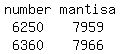
can be used to find the mantissa (sort-of the decimal part) of a logarithm in base 10 of a number with 4 significant digits.
The table does not have a mantissa for 6253, so you have to interpolate.
Not worrying for now about decimal places, we are looking for a mantissa between 7959 and 7966.
For an increase between 6250 and 6260 of 10, there is an increase of 7=7966-7959
for the mantissa.
That is a 0.7 increase in mantissa for each unit increase in the number.
The increase in mantissa corresponding the difference between 6250 and 6253 is
3x0.7=2.1, but we round it to 2.
So the mantissa for 6253 is 7959+2=7961
Not worrying for now about decimal places, we are looking for a mantissa between 7959 and 7966.
The mantissa is the same, for  , , 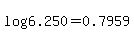 , and and , and and  . Those logarithms . Those logarithms
No matter where the decimal point is located, those logarithms are all found by adding  plus some integer. plus some integer.
The integer depends on how the number of digits to the left of the decimal point
6250 and 6250.00 have 4 digits to the left, just like 1000=10^3
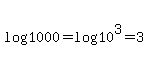
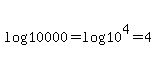
6253 is more than 1000 and less than 10000, so  is more than 3 but less than 4. is more than 3 but less than 4.
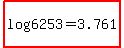
To find we add to the mantissa 
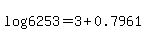 --> --> 
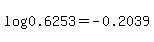
What about  ? ?
0.6253 is between 1 and 0.1, with 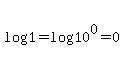 and and 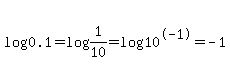 , ,
so, must be more than -1 and less than 0.
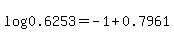 --> --> 
Question 296183: Alphonse has three times as many marbles as Beatrice. If Alphonse would give 15 of his marbles to Beatrice then he would have twice as many marbles as she does. How many marbles must Alphonse give to Beatrice so that they each have the same number?
(A) 30 (B) 45 (C) 60 (D) 90 (E) Not enough Information
Answer by ikleyn(53937) (Show Source):
You can put this solution on YOUR website! .
Alphonse has three times as many marbles as Beatrice. If Alphonse would give 15 of his marbles to Beatrice
then he would have twice as many marbles as she does. How many marbles must Alphonse give to Beatrice
so that they each have the same number?
(A) 30 (B) 45 (C) 60 (D) 90 (E) Not enough Information
~~~~~~~~~~~~~~~~~~~~~~~~~~~~~
The solution in the post by @mananth is incorrect, because his setup equation is wrong.
I came to bring a correct solution.
Let's Beatrice has x marbles.
Then Alphonse has 3x marbles.


After giving, Alphonse has  (3x-15) marbles;  Beatrice has (x+15) marbles.


The setup equation is

    3x - 15 = 2(x+15).


Simplify and find x

    3x - 15 = 2x + 30,

    3x - 2x = 30 + 15,

       x    =    45.


Thus, initially Beatrice has 45 marbles, Alphonse has 3*45 = 135 marbles.


Let 'y' be the number of marbles Alphonse should give to Beatrice so they each has the same number

    135 - y = 45 + y,

    135 - 45 = y + y,

        90   =  2y,

         y   =  90/2 = 45.


ANSWER.  Alphonse should give 45 marbles to Beatrice so they each has the same number of marbles.
Solved correctly.
Question 1164612: Translate the following statement to a symbolic representation.
If Mouth finds One-Eyed Willy's treasure then his family can save their home
Answer by Edwin McCravy(20086) (Show Source):
You can put this solution on YOUR website!
Break it into four parts:

(1) IF
(2) Mouth finds One-Eyed Willy's treasure
(3) THEN
(4) his family can save their home

This is an "IF,THEN" problem, called a "CONDITIONAL".

The symbols most people use are
Connective	Symbol
Negation	¬  (NOT) sometimes ~
Conjunction	∧  (AND) sometimes &
Disjunction	∨  (OR)  just a capital V
Conditional	→  (IF-THEN) sometimes ⊃ or you can type -->
Biconditional	↔  (IF AND ONLY IF)
Therefore	∴  (THEREFORE)

Choose a capital letter for statement (2), say M, (for its first letter)
Choose → ⊃ for the conditional (IF-THEN)
Choose a capital letter for statement (4), say H, (for its first letter).

Answer:  M → H, or if you prefer M ⊃ H

Edwin
Question 288541: A motorboat takes 4 hours to travel 256 mi going upstream. The return trip takes 2 hours going downstream. What is the rate of the boat in still water and what is the rate of the current?
Found 2 solutions by n2, ikleyn:
Answer by n2(91) (Show Source): (Show Source):
You can put this solution on YOUR website! .
A motorboat takes 4 hours to travel 256 mi going upstream. The return trip takes 2 hours going downstream.
What is the rate of the boat in still water and what is the rate of the current?
~~~~~~~~~~~~~~~~~~~~~~~~~~~~
Let u be the rate of the motorboat in still water (in miles per hour)
and v be the rate of the current (in the same units).
Then the effective rate of the motorboat downstream is u + v miles per hour,
and the effective rate of the motorboat upstream is u - v miles per hour.
From the problem, the effective rate of the motorboat downstream is the distance of 256 miles
divided by the time of 2 hours  = 128 mph.
The effective rate of the motorboat upstream is the distance of 256 miles
divided by the time of 4 hours = 128 mph.
The effective rate of the motorboat upstream is the distance of 256 miles
divided by the time of 4 hours  = 64 mph.
So, we have two equations to find 'u' and 'v'
u + v = 128, (1)
u - v = 64. (2)
To solve, add equations (1) and (2). The terms 'v' and '-v' will cancel each other, and you will get
2u = 128 + 64 = 192 ---> u = 192/2 = 96.
Now from equation (1)
v = 128 - u = 128 - 96 = 32.
ANSWER. Under given conditions, the rate of the motorboat in still water is 96 mph.
The rate of the current is 32 mph km/h. = 64 mph.
So, we have two equations to find 'u' and 'v'
u + v = 128, (1)
u - v = 64. (2)
To solve, add equations (1) and (2). The terms 'v' and '-v' will cancel each other, and you will get
2u = 128 + 64 = 192 ---> u = 192/2 = 96.
Now from equation (1)
v = 128 - u = 128 - 96 = 32.
ANSWER. Under given conditions, the rate of the motorboat in still water is 96 mph.
The rate of the current is 32 mph km/h.
Solved.
Answer by ikleyn(53937) (Show Source):
You can put this solution on YOUR website! .
A motorboat takes 4 hours to travel 256 mi going upstream. The return trip takes 2 hours going downstream.
What is the rate of the boat in still water and what is the rate of the current?
~~~~~~~~~~~~~~~~~~~~~~~~~~~~
The solution by @mananth in his post has arithmetic errors that lead to wrong answer.
In addition, the form of his presentation is MONSTROUS, which can not serve as a tool
for teaching or learning.
Therefore, I came with my alternative solution to replace the post by @mananth.
Let u be the rate of the motorboat in still water (in miles per hour)
and v be the rate of the current (in the same units).


Then the effective rate of the motorboat downstream is  u + v  miles per hour,
and  the effective rate of the motorboat   upstream is  u - v  miles per hour.


From the problem, the effective rate of the motorboat downstream is the distance of 256 miles
divided by the time of 2 hours   = 128 mph.

                  The effective rate of the motorboat upstream is the distance of 256 miles
divided by the time of 4 hours   = 64 mph.


So, we have two equations to find 'u' and 'v'

    u + v = 128,    (1)

    u - v =  64.    (2)


To solve, add equations (1) and (2).  The terms 'v' and '-v' will cancel each other, and you will get

    2u = 128 + 64 = 192  --->   u = 192/2 = 96.

Now from equation (1)

     v = 128 - u = 128 - 96 = 32.


ANSWER.  Under given conditions, the rate of the motorboat in still water is 96 mph.
         The rate of the current is 32 mph km/h.
Solved.
-------------------------------
The reader should know that this problem and this type of problems @mananth "solves" using his computer code.
So, his posts are not a production of a human - they are production of a computer code,
and @mananth himself does not check his production (and even does not read it).
His computer code for this type of problem is written by an incorrect way, so every time
it produces the same type malformed version.
Therefore, at every appearance, I come and fix/repair his presentation to make sense from badly presented solution
and to keep this forum relatively clean from garbage.
@ikleyn
POST-SOLUTION note:
The given data in the problem are not realistic, and lead to unrealistic final answer.
Indeed, without explanations, it is obvious that the rate of the current of 32 miles per hour is too much
in order for some real motorboat would be able to move against the current, if it is not a fantastic story.
A normal and regular speed of the current in such problem is, usually, not more that 4 miles per hour.
This is a typical current speed for lowland rivers.
But this defect is not a defect of the solution - it is a product of the defective
and unsatisfactory job of the Math composer, i.e. the person, who created this Math problem.
Question 280019: Please solve this word problem: How much money should parents deposit today in a college fund earning 5% compound quarterly, so that it will accumulate to $150,000.00 in 15 years?
Found 2 solutions by josgarithmetic, ikleyn:
Answer by josgarithmetic(39838) (Show Source):
Answer by ikleyn(53937) (Show Source):
You can put this solution on YOUR website! .
Please solve this word problem: How much money should parents deposit today in a college fund
earning 5% compound quarterly, so that it will accumulate to $150,000.00 in 15 years?
~~~~~~~~~~~~~~~~~~~~~~~~~~~~~~~~~~~
The basic formula and the calculations in the post by @mananth are incorrect.
I came to bring a correct solution.
Use the formula of the future value of a discretely compounded account
150000 =  .
where P is the unknown deposited value.
From this formula
P = .
where P is the unknown deposited value.
From this formula
P =  = 71185.14 dollars.
ANSWER. $71,185.14 should be deposited today. = 71185.14 dollars.
ANSWER. $71,185.14 should be deposited today.
Solved correctly.
Question 1210587: Reposted Question :
"A pint a pound the world round" is an old saying. A pint of water weighs slightly more than a pound. Determine weight of a milliliter of water.
Answer by josgarithmetic(39838) (Show Source):
Question 1210586: Reposted Question :
"A pint a pound the world round" is an old saying. A pint of water weighs slightly more than a pound. Determine weight of a milliliter of water.
Answer by josgarithmetic(39838) (Show Source):
Question 1210585: Reposted Question :
"A pint a pound the world round" is an old saying. A pint of water weighs slightly more than a pound. Determine weight of a milliliter of water.
Answer by josgarithmetic(39838) (Show Source):
You can put this solution on YOUR website! 1 pint is one-eigth gallon.
1 gallon is 3.7854 liters.
0.001 liter is 1 ml.
If your material is given as 1 pint makes for 1 pound then this is given to be the density.
You have at least enough conversion factors to anwer the exercise's question.
Question 1210584: "A pint a pound the world round" is a old saying. If a pint weighs a pound, determine weight of a milliliter.
Pint = pound.
Milliliter = .001 liter.
Not sure how to solve.
Answer by greenestamps(13367) (Show Source):
You can put this solution on YOUR website!
"pint = pound"?
That makes no sense. A pint is a measure of volume; a pound is a measure of weight.
You need the conversion from pints to milliliters: 1 pint = 473.176473 ml
To find the weight (in pounds) of a milliliter, divide the weight of the pint (in pounds) by the number of milliliters in a pint.
Use a calculator and express the result as desired.
Question 269651: At a point on the ground 80ft from the base of a tree, the distance to the top of the tree is 11ft more than 2 times the height of the tree. Find the height of the tree. (Simplify your answer. Round to the nearest foot as needed.)
Found 2 solutions by n2, ikleyn:
Answer by n2(91) (Show Source):
Answer by ikleyn(53937) (Show Source):
Question 261181: Mary walked 4 laps around the park track. It took Mary 4 minutes to walk the first
lap. The second lap took 25% longer than the first lap. The third lap took 20%
longer than the second lap. The final lap took 50% longer than the third. What was
Mary�s total walking time for the 4 laps?
Answer by josgarithmetic(39838) (Show Source):
|
Older solutions: 1..45, 46..90, 91..135, 136..180, 181..225, 226..270, 271..315, 316..360, 361..405, 406..450, 451..495, 496..540, 541..585, 586..630, 631..675, 676..720, 721..765, 766..810, 811..855, 856..900, 901..945, 946..990, 991..1035, 1036..1080, 1081..1125, 1126..1170, 1171..1215, 1216..1260, 1261..1305, 1306..1350, 1351..1395, 1396..1440, 1441..1485, 1486..1530, 1531..1575, 1576..1620, 1621..1665, 1666..1710, 1711..1755, 1756..1800, 1801..1845, 1846..1890, 1891..1935, 1936..1980, 1981..2025, 2026..2070, 2071..2115, 2116..2160, 2161..2205, 2206..2250, 2251..2295, 2296..2340, 2341..2385, 2386..2430, 2431..2475, 2476..2520, 2521..2565, 2566..2610, 2611..2655, 2656..2700, 2701..2745, 2746..2790, 2791..2835, 2836..2880, 2881..2925, 2926..2970, 2971..3015, 3016..3060, 3061..3105, 3106..3150, 3151..3195, 3196..3240, 3241..3285, 3286..3330, 3331..3375, 3376..3420, 3421..3465, 3466..3510, 3511..3555, 3556..3600, 3601..3645, 3646..3690, 3691..3735, 3736..3780, 3781..3825, 3826..3870, 3871..3915, 3916..3960, 3961..4005, 4006..4050, 4051..4095, 4096..4140, 4141..4185, 4186..4230, 4231..4275, 4276..4320, 4321..4365, 4366..4410, 4411..4455, 4456..4500, 4501..4545, 4546..4590, 4591..4635, 4636..4680, 4681..4725, 4726..4770, 4771..4815, 4816..4860, 4861..4905, 4906..4950, 4951..4995, 4996..5040, 5041..5085, 5086..5130, 5131..5175, 5176..5220, 5221..5265, 5266..5310, 5311..5355, 5356..5400, 5401..5445, 5446..5490, 5491..5535, 5536..5580, 5581..5625, 5626..5670, 5671..5715, 5716..5760, 5761..5805, 5806..5850, 5851..5895, 5896..5940, 5941..5985, 5986..6030, 6031..6075, 6076..6120, 6121..6165, 6166..6210, 6211..6255, 6256..6300, 6301..6345, 6346..6390, 6391..6435, 6436..6480, 6481..6525, 6526..6570, 6571..6615, 6616..6660, 6661..6705, 6706..6750, 6751..6795, 6796..6840, 6841..6885, 6886..6930, 6931..6975, 6976..7020, 7021..7065, 7066..7110, 7111..7155, 7156..7200, 7201..7245, 7246..7290, 7291..7335, 7336..7380, 7381..7425, 7426..7470, 7471..7515, 7516..7560, 7561..7605, 7606..7650, 7651..7695, 7696..7740, 7741..7785, 7786..7830, 7831..7875, 7876..7920, 7921..7965, 7966..8010, 8011..8055, 8056..8100, 8101..8145, 8146..8190, 8191..8235, 8236..8280, 8281..8325, 8326..8370, 8371..8415, 8416..8460, 8461..8505, 8506..8550, 8551..8595, 8596..8640, 8641..8685, 8686..8730, 8731..8775, 8776..8820, 8821..8865, 8866..8910, 8911..8955, 8956..9000, 9001..9045, 9046..9090, 9091..9135, 9136..9180, 9181..9225, 9226..9270, 9271..9315, 9316..9360, 9361..9405, 9406..9450, 9451..9495, 9496..9540, 9541..9585, 9586..9630, 9631..9675, 9676..9720, 9721..9765, 9766..9810, 9811..9855, 9856..9900, 9901..9945, 9946..9990, 9991..10035, 10036..10080, 10081..10125, 10126..10170, 10171..10215, 10216..10260, 10261..10305, 10306..10350, 10351..10395, 10396..10440, 10441..10485, 10486..10530, 10531..10575, 10576..10620, 10621..10665, 10666..10710, 10711..10755, 10756..10800, 10801..10845, 10846..10890, 10891..10935, 10936..10980, 10981..11025, 11026..11070, 11071..11115, 11116..11160, 11161..11205, 11206..11250, 11251..11295, 11296..11340, 11341..11385, 11386..11430, 11431..11475, 11476..11520, 11521..11565, 11566..11610, 11611..11655, 11656..11700, 11701..11745, 11746..11790, 11791..11835, 11836..11880, 11881..11925, 11926..11970, 11971..12015, 12016..12060, 12061..12105, 12106..12150, 12151..12195, 12196..12240, 12241..12285, 12286..12330, 12331..12375, 12376..12420, 12421..12465, 12466..12510, 12511..12555, 12556..12600, 12601..12645, 12646..12690, 12691..12735, 12736..12780, 12781..12825, 12826..12870, 12871..12915, 12916..12960, 12961..13005, 13006..13050, 13051..13095, 13096..13140, 13141..13185, 13186..13230, 13231..13275, 13276..13320, 13321..13365, 13366..13410, 13411..13455, 13456..13500, 13501..13545, 13546..13590, 13591..13635, 13636..13680, 13681..13725, 13726..13770, 13771..13815, 13816..13860, 13861..13905, 13906..13950, 13951..13995, 13996..14040, 14041..14085, 14086..14130, 14131..14175, 14176..14220, 14221..14265, 14266..14310, 14311..14355, 14356..14400, 14401..14445, 14446..14490, 14491..14535, 14536..14580, 14581..14625, 14626..14670, 14671..14715, 14716..14760, 14761..14805, 14806..14850, 14851..14895, 14896..14940, 14941..14985, 14986..15030, 15031..15075, 15076..15120, 15121..15165, 15166..15210, 15211..15255, 15256..15300, 15301..15345, 15346..15390, 15391..15435, 15436..15480, 15481..15525, 15526..15570, 15571..15615, 15616..15660, 15661..15705, 15706..15750, 15751..15795, 15796..15840, 15841..15885, 15886..15930, 15931..15975, 15976..16020, 16021..16065, 16066..16110, 16111..16155, 16156..16200, 16201..16245, 16246..16290, 16291..16335, 16336..16380, 16381..16425, 16426..16470, 16471..16515, 16516..16560, 16561..16605, 16606..16650, 16651..16695, 16696..16740, 16741..16785, 16786..16830, 16831..16875, 16876..16920, 16921..16965, 16966..17010, 17011..17055, 17056..17100, 17101..17145, 17146..17190, 17191..17235, 17236..17280, 17281..17325, 17326..17370, 17371..17415, 17416..17460, 17461..17505, 17506..17550, 17551..17595, 17596..17640, 17641..17685, 17686..17730, 17731..17775, 17776..17820, 17821..17865, 17866..17910, 17911..17955, 17956..18000, 18001..18045, 18046..18090, 18091..18135, 18136..18180, 18181..18225, 18226..18270, 18271..18315, 18316..18360, 18361..18405, 18406..18450, 18451..18495, 18496..18540, 18541..18585, 18586..18630, 18631..18675, 18676..18720, 18721..18765, 18766..18810, 18811..18855, 18856..18900, 18901..18945, 18946..18990, 18991..19035, 19036..19080, 19081..19125, 19126..19170, 19171..19215, 19216..19260, 19261..19305, 19306..19350, 19351..19395, 19396..19440, 19441..19485, 19486..19530, 19531..19575, 19576..19620, 19621..19665, 19666..19710, 19711..19755, 19756..19800, 19801..19845, 19846..19890, 19891..19935, 19936..19980, 19981..20025, 20026..20070, 20071..20115, 20116..20160, 20161..20205, 20206..20250, 20251..20295, 20296..20340, 20341..20385, 20386..20430, 20431..20475, 20476..20520, 20521..20565, 20566..20610, 20611..20655, 20656..20700, 20701..20745, 20746..20790, 20791..20835, 20836..20880, 20881..20925, 20926..20970, 20971..21015, 21016..21060, 21061..21105, 21106..21150, 21151..21195, 21196..21240, 21241..21285, 21286..21330, 21331..21375, 21376..21420, 21421..21465, 21466..21510, 21511..21555, 21556..21600, 21601..21645, 21646..21690, 21691..21735, 21736..21780, 21781..21825, 21826..21870, 21871..21915, 21916..21960, 21961..22005, 22006..22050, 22051..22095, 22096..22140, 22141..22185, 22186..22230, 22231..22275, 22276..22320, 22321..22365, 22366..22410, 22411..22455, 22456..22500, 22501..22545, 22546..22590, 22591..22635, 22636..22680, 22681..22725, 22726..22770, 22771..22815, 22816..22860, 22861..22905, 22906..22950, 22951..22995, 22996..23040, 23041..23085, 23086..23130, 23131..23175, 23176..23220, 23221..23265, 23266..23310, 23311..23355, 23356..23400, 23401..23445, 23446..23490, 23491..23535, 23536..23580, 23581..23625, 23626..23670, 23671..23715, 23716..23760, 23761..23805, 23806..23850, 23851..23895, 23896..23940, 23941..23985, 23986..24030, 24031..24075, 24076..24120, 24121..24165, 24166..24210, 24211..24255, 24256..24300, 24301..24345, 24346..24390, 24391..24435, 24436..24480, 24481..24525, 24526..24570, 24571..24615, 24616..24660, 24661..24705, 24706..24750, 24751..24795, 24796..24840, 24841..24885, 24886..24930, 24931..24975, 24976..25020, 25021..25065, 25066..25110, 25111..25155, 25156..25200, 25201..25245, 25246..25290, 25291..25335, 25336..25380, 25381..25425, 25426..25470, 25471..25515, 25516..25560, 25561..25605, 25606..25650, 25651..25695, 25696..25740, 25741..25785, 25786..25830, 25831..25875, 25876..25920, 25921..25965, 25966..26010, 26011..26055, 26056..26100, 26101..26145, 26146..26190, 26191..26235, 26236..26280, 26281..26325, 26326..26370, 26371..26415, 26416..26460, 26461..26505, 26506..26550, 26551..26595, 26596..26640, 26641..26685, 26686..26730, 26731..26775, 26776..26820, 26821..26865, 26866..26910, 26911..26955, 26956..27000, 27001..27045, 27046..27090, 27091..27135, 27136..27180, 27181..27225, 27226..27270, 27271..27315, 27316..27360, 27361..27405, 27406..27450, 27451..27495, 27496..27540, 27541..27585, 27586..27630, 27631..27675, 27676..27720, 27721..27765, 27766..27810, 27811..27855, 27856..27900, 27901..27945, 27946..27990, 27991..28035, 28036..28080, 28081..28125, 28126..28170, 28171..28215, 28216..28260, 28261..28305, 28306..28350, 28351..28395, 28396..28440, 28441..28485, 28486..28530, 28531..28575, 28576..28620, 28621..28665, 28666..28710, 28711..28755, 28756..28800, 28801..28845, 28846..28890, 28891..28935, 28936..28980, 28981..29025, 29026..29070, 29071..29115, 29116..29160, 29161..29205, 29206..29250, 29251..29295, 29296..29340, 29341..29385, 29386..29430, 29431..29475, 29476..29520, 29521..29565, 29566..29610, 29611..29655, 29656..29700, 29701..29745, 29746..29790, 29791..29835, 29836..29880, 29881..29925, 29926..29970, 29971..30015, 30016..30060, 30061..30105, 30106..30150, 30151..30195, 30196..30240, 30241..30285, 30286..30330, 30331..30375, 30376..30420, 30421..30465, 30466..30510, 30511..30555, 30556..30600, 30601..30645, 30646..30690, 30691..30735, 30736..30780
|
